Mostrando entradas con la etiqueta Louise Glück. Mostrar todas las entradas

lunes, 12 de agosto de 2024

Louise Glück

UNA FANTASÍA

Voy a decirte algo: cada día
muere gente. Y eso es sólo el principio.
Cada día, nuevas viudas nacen en las funerarias, 
nuevos huérfanos. Se sientan, mano sobre mano, 
 e intentan tomar decisiones sobre su nueva vida.
Luego van al cementerio, algunos 
por vez primera. Tienen miedo de llorar, 
de no llorar también. Alguien se vuelca
con ellos, les dice qué  hay que hacer:
pronunciar unas palabras, 
echar algo de tierra en la tumba abierta aún…
Y después todo el mundo vuelve a casa, 
y la casa se llena de visitas, 
con la viuda sentada en el sofá, majestuosa, 
la gente que hace cola y se aproxima: 
unos cogen su mano, otros la abrazan.
Ella encuentra qué decirle a cada uno, 
da las gracias, les da las gracias por haber venido. 
En el fondo, quiere que se marchen.
Quiere volver al cementerio, 
al cuarto del paciente, al hospital. Sabe 
que no es posible. Pero es su única esperanza, 
querer volver atrás. Tan sólo un poco, 
no hasta su boda, no hasta el primer beso.


Louise Glück, Remembered by Writers | The New Yorker


A FANTASY

I’ll tell you something: every day

people are dying. And that’s just the beginning.

Every day, in funeral homes, new widows are born, 

new orphans. They sit with their hands folded, 

trying to decide about this new life. 

Then they’re in the cemetery, some of them

for the first time. They’re frightened of crying, 

sometimes of not crying. Someone leans over, 

tells them what to do next, which might mean

saying a few words, sometimes

throwing dirt in the open grave.

And after that, everyone goes back to the house, 

which is suddenly full of visitors.

The widow sits on the couch, very stately, 

so people line up to approach her, 

sometimes take her hand, sometimes embrace her.

She finds something to say to everybody, 

thanks them, thanks them for coming. 

In her heart, she wants them to go away.

She wants to be back in the cemetery, 

back in the sickroom, the hospital. She knows

it isn’t possible. But it’s her only hope, 

the wish to move backward. And just a little, 

not so far as the marriage, the first kiss. 

miércoles, 13 de septiembre de 2023

Louise Glück

Una fantasía

Voy a decirte algo: cada día

muere gente. Y eso es sólo el principio.

Cada día, nuevas viudas nacen en las funerarias, 

nuevos huérfanos. Se sientan, mano sobre mano, 

 e intentan tomar decisiones sobre su nueva vida.

Luego van al cementerio, algunos 

por vez primera. Tienen miedo de llorar, 

de no llorar también. Alguien se vuelca

con ellos, les dice qué  hay que hacer:

pronunciar unas palabras, 

echar algo de tierra en la tumba abierta aún…

Y después todo el mundo vuelve a casa, 

y la casa se llena de visitas, 

con la viuda sentada en el sofá, majestuosa, 

la gente que hace cola y se aproxima: 

unos cogen su mano, otros la abrazan.

Ella encuentra qué decirle a cada uno, 

da las gracias, les da las gracias por haber venido. 

En el fondo, quiere que se marchen.

Quiere volver al cementerio, 

al cuarto del paciente, al hospital. Sabe 

que no es posible. Pero es su única esperanza, 

querer volver atrás. Tan sólo un poco, 

no hasta su boda, no hasta el primer beso.

miércoles, 3 de agosto de 2022

Louise Glück

Felicidad


Un hombre y una mujer duermen en un blanco lecho.

Ya es de día. Pienso

Pronto se despertarán.

En la mesita de noche hay un florero

con azucenas; charcos

de luz en sus gargantas.

Veo a él girarse hacia ella

como para decir su nombre

pero silenciosamente , se hunde en su boca –

En el álfeizar de la ventana,

una vez,dos veces,

un pájaro canta. 

Y entonces ella se despierta ;su cuerpo

lleno con su respiración .


Abro mis ojos;tú estás mirándome.

Sobre esta habitación

el sol casi está planeando.

Mira tu cara,dices,

poniendo la tuya muy cerca de la mía

para hacer de espejo.

Que tranquilo estás. Y la ardiente rueda

pasa suavemente sobre nosotros. 


A VILLAGE LIFE: Poems : GLUCK,LOUISE: Amazon.es: Libros


HAPPINESS

A man and a woman lie on a white bed.

It is morning. I think

Soon they will waken.

On the bedside table is a vase

of lilies; sunlight

pools in their throats.

I watch him turn to her

as though to speak her name

but silently, deep in her mouth--

At the window ledge,

once, twice,

a bird calls.

And then she stirs; her body

fills with his breath.


I open my eyes; you are watching me.

Almost over this room

the sun is gliding.

Look at your face, you say,

holding your own close to me

to make a mirror.

How calm you are. And the burning wheel

passes gently over us.


sábado, 29 de enero de 2022

Louise Glück

LEY NO ESCRITA

Interesante cómo nos enamoramos:
en mi caso por completo, del todo,
y, oh, a menudo,
así fue en mi juventud.
Y siempre de hombres aniñados,
amorfos, sombríos, que daban tímidas patadas
a las hojas muertas:
como Balanchine.
Ni siquiera los veía como distintas versiones de lo mismo.
Yo, con mi inflexible platonismo,
con mi empeño en ver las cosas una a una,
me alcé contra el artículo indefinido.
Y así, los errores de mi juventud
me hundieron en la desesperanza,
porque se repetían,
como suele ocurrir.
Pero en ti percibí algo ajeno al arquetipo,
una verdadera expansión, un optimismo
y un amor a lo terrenal
que no conocía mi carácter. Con orgullo
bendije la buena suerte de tenerte.
La bendije por completo, al igual que aquellos años.
Y tú, a sabiendas y con crueldad
me enseñaste poco a poco el sinsentido
de esa palabra.


La Parada Poética: Louise Glück / Selección de poemas
Louise Glück


Unwritten Law

Interesting how we fall in love:
In my case, absolutely. Absolutely, and, alas, often—
so it was in my youth.
And always with rather boyish men—
unformed, sullen, or shyly kicking the dead leaves:
in the manner of Balanchine.
Nor did I see them as versions of the same thing.
I, with my inflexible Platonism,
my fierce seeing of only one thing at a time:
I ruled against the indefinite article.
And yet, the mistakes of my youth
made me hopeless, because they repeated themselves,
as is commonly true.
But in you I felt something beyond the archetype—
a true expansiveness, a buoyance and love of the earth
utterly alien to my nature. To my credit,
I blessed my good fortune in you.
Blessed it absolutely, in the manner of those years.
And you in your wisdom and cruelty
gradually taught me the meaninglessness of that term.


sábado, 1 de enero de 2022

Louise Glück

EL DESEO

¿Te acuerdas de cuando pediste un deseo?

Yo pido muchos deseos.

Cuando te mentí
sobre lo de la mariposa. Siempre me pregunté
qué pediste.

¿Qué crees que pedí yo?

No sé. Que volvería,
que al final de alguna manera estaríamos juntos.

Pedí lo que siempre pido.
Pedí otro poema.


The Wish 

Remember that time you made the wish?

I make a lot of wishes.

The time I lied to you

about the butterfly. I always wondered

what you wished for.

What do you think I wished?

I don’t know. That I’d come back,

that we’d somehow be together in the end.

I wished for what I always wish for.

I wished for another poem.


miércoles, 15 de diciembre de 2021

Louise Glück

Amor bajo la luz de la luna

A veces un hombre o una mujer imponen su desesperación
a otra persona, a eso lo llaman
alternativamente desnudar el corazón, o desnudar el alma.
(Lo que significa que para entonces adquirieron una.)
Afuera, la tarde de verano, todo un mundo
arrojado a la luna: grupos de formas plateadas
que podrían ser árboles o edificios, el angosto jardín
donde el gato se esconde para revolcarse en el polvo,
la rosa, la coreopsis y, en la oscuridad, la cúpula dorada del capitolio
transformada en aleación de luz de luna,
forma sin detalle, el mito, el arquetipo, el alma
llena de ese fuego que en realidad es luz de luna,
,tomada de otra fuente, y brilla unos instantes, como brilla
la luna: piedra o no,
la luna sigue estando más que viva.


Love in Moonlight

Sometimes a man or woman forces his despair
on another person, which is called
baring the heart, alternatively, baring the soul–
meaning for this moment they acquired souls–
outside, a summer evening, a whole world
thrown away on the moon: groups of silver forms
which might be buildings or trees, the narrow garden
where the cat hides, rolling on its back in the dust,
the rose, the coreopsis, and, in the dark, the gold
          dome of the capitol
converted to an alloy of moonlight, shape
without detail, the myth, the archetype, the soul
filled with fire that is moonlight really, taken
from another source, and briefly
shining as the moon shines: stone or not,
the moon is still that much of a living thing.


viernes, 24 de septiembre de 2021

Louise Glück

LAS SIETE EDADES

En mi primer sueño el mundo parecía
lo salado, lo amargo, lo prohibido, lo dulce
En mi segundo sueño descendía,


era humana, no veía nada de nada
bestia como soy

debía tocarlo, contenerlo

me escondí en la arboleda,
trabajé en los campos hasta que quedaron yermos

un tiempo
que nunca volverá-
el trigo seco en gravillas, cajones
de higos y aceitunas

Hasta amé alguna vez, a mi manera
repugnante, humana

y como todo el mundo llamé a ese logro
libertad erótica,
por absurdo que parezca

El trigo cosechado, almacenado; seca
la última fruta: el tiempo
que se acumula, sin usar,
¿también termina?

En mi primer sueño el mundo parecía
lo dulce, lo prohibido
pero no había ningún jardín, solo
la materia prima

Era humana:
había rogado descender 
la sal, lo amargo, lo difícil, lo preventivo

Y como todos tomé, fui tomada
soñé

fui traicionada:

la tierra me fue dada en un sueño
En un sueño la poseí.


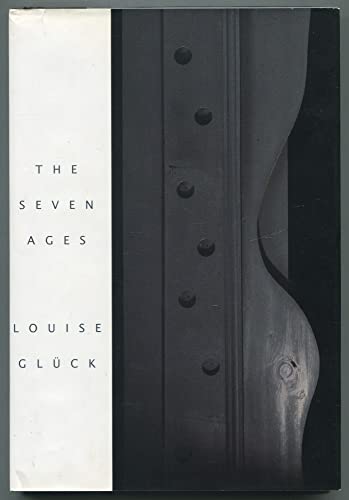
9780060185268: The Seven Ages - IberLibro - Gluck, Louise: 0060185260


the seven ages

In my first dream, the world appeared
the salt, the bitter, the forbidden, the sweet
In my second I descended

I was human, I couldn’t just see a thing
beast that I am

I had to touch, to contain it

I hid in the groves,
I worked in the fields until the fields were bare —

time
that will never come again —
the dry wheat bound, caskets
of figs and olives

I even loved a few times in my disgusting human way

and like every one I called that accomplishment
erotic freedom,
absurd as it seems

The wheat gathered and stored, the last
fruit dried: time

that is hoarded, that is never used,
does it also end?

In my first dream the world appeared
the sweet, the forbidden
but there was no garden, only
raw elements

I was human:
I had to beg to descend
the salt, the bitter, the demanding, the preemptive

And like everyone, I took, I was taken
I dreamed

I was betrayed:

Earth was given to me in a dream
In a dream I possessed it


lunes, 12 de julio de 2021

Louise Glück

ITACA

El amado no
necesita estar vivo. El amado
vive en la cabeza. El telar
es para los pretendientes, encordado
como un arpa con el hilo blanco de un sudario.

Él era dos personas.
Era el cuerpo y la voz, el sencillo
magnetismo de un hombre vivo, y también
el desplegado sueño o imagen
a los que da forma la mujer que trabaja el telar,
que se sienta ahí en un salón lleno
de hombres sin imaginación.

Igual que le tienes lástima
al engañado mar que intentó
llevárselo para siempre
y solamente se llevó al primero,
al verdadero marido, debes
tenerle lástima a estos hombres: no saben
lo que están mirando;
no saben que cuando uno ama de esta forma
un sudario se convierte en un traje de novia.


EG : #PremioNobelDeLiteratura2020
Louise Glück


Ithaca

The beloved doesn’t 
need to live. The beloved 
lives in the head. The loom 
is for the suitors, strung up 
like a harp with white shroud-thread. 

He was two people. 
He was the body and the voice, the easy 
magnetism of a living man, and then 
the unfolding dream or image 
shaped by the woman working the loom, 
sitting there in a hall filled 
with literal-minded men. 

As you pity 
the deceived sea that tried 
to take him away forever 
and took only the first, 
the actual husband, you must 
pity these men: they don’t know 
what they’re looking at; 
they don’t know that when one loves this way 
the shroud becomes a wedding dress.

miércoles, 14 de abril de 2021

Louise Glück

EL TRIUNFO DE AQUILES

En la historia de Patroclo,
no sobrevive nadie, ni siquiera Aquiles,
que era casi un dios.
Patroclo se parecía a él; usaron
la misma armadura.

En estas amistades,
siempre hay uno que atiende al otro,
la jerarquía
se nota todo el tiempo, aunque no se pueda
confiar en las leyendas:
su fuente es el que sobrevive,
el abandonado.

¿Qué eran las naves griegas incendiadas
en comparación con esa pérdida?

En su carpa, Aquiles
lo lloró con todo su ser,
y los dioses vieron

que ya era un hombre muerto, víctima
de la parte que amaba,
de la parte mortal.


Pin en Epic people
El triunfo de Aquiles  de Franz Matsch


The Triumph Of Achilles

In the story of Patroclus 
no one survives, not even Achilles 
who was nearly a god. 
Patroclus resembled him; they wore 
the same armor. 

Always in these friendships 
one serves the other, one is less than the other: 
the hierarchy 
is always apparant, though the legends 
cannot be trusted-- 
their source is the survivor, 
the one who has been abandoned. 

What were the Greek ships on fire 
compared to this loss? 

In his tent, Achilles 
grieved with his whole being 
and the gods saw 
he was a man already dead, a victim 
of the part that loved, 
the part that was mortal.


miércoles, 10 de marzo de 2021

Louise Glück

LAMIUM

Así se vive cuando tienes un corazón helado.
Como yo: entre sombras, arrastrándose sobre la roca fría,
bajo las copas inmensas de los arces.

El sol apenas me alcanza.
A veces, al comenzar la primavera, lo veo elevarse a lo lejos.
Luego crecen las hojas sobre él, hasta cubrirlo todo.

Siento su brillo entre las hojas, vacilante,
como quien golpea un vaso con una cuchara de metal.

No todos necesitan de la luz
en igual medida. Algunos
creamos nuestra propia luz: una hoja plateada
como un sendero que nadie puede recorrer, un lago de plata
poco profundo bajo la oscuridad de los arces.

Pero esto ya lo sabes.
Tú y aquellos que piensan
que viven por la verdad, y en consecuencia,
aman todo lo que es frío.


LAMIUM

This is how you live when you have a cold heart.
As I do: in shadows, trailing over cool rock,
under the great maple trees.

The sun hardly touches me.
Sometimes I see it in early spring, rising very far away.
Then leaves grow over it, completely hiding it. I feel it
glinting through the leaves, erratic,
like someone hitting the side of a glass with a metal spoon.

Living things don’t all require
light in the same degree. Some of us
make our own light: a silver leaf
like a path no one can use, a shallow
lake of silver in the darkness under the great maples.

But you know this already.
You and the others who think
you live for truth and, by extension, love
all that is cold.